

The open source ecosystem is rich but has gaps, and together we can close them. We scored 1,278 of products across openness, capability and adoption, and created a map based on the three core pillars of building an AI system. Explore the map, suggest a feature, and close a gap.
Gap map 0.6.0 – Updated
- Total products ›
- 66,396
- Assessed products ›
- 1,278
- Open(ish) products ›
- 1,005
- Product gaps to fill
- 40
The full AI stack in a single view
Our taxonomy and approach to openness build on the 2024 Columbia Convening on Openness in AI, the Model Openness Framework, and established open source licensing standards.
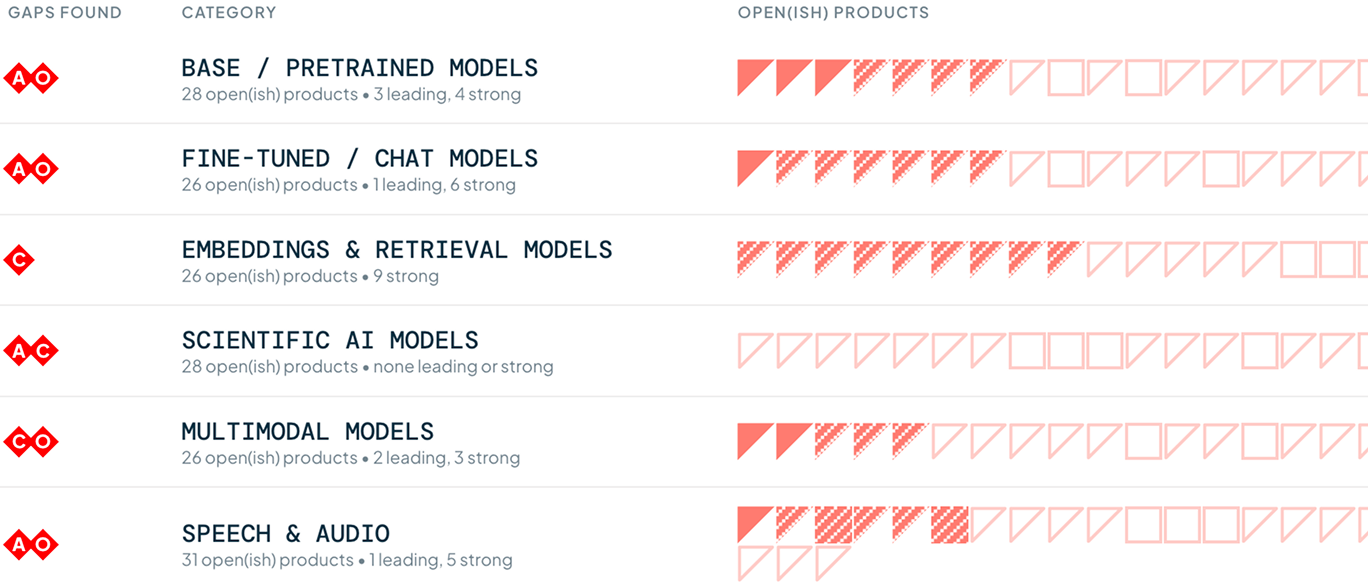
Latest updates to Gap Map
17 updates in the last 4 months
See all ›

The 3 pillars of building an AI system
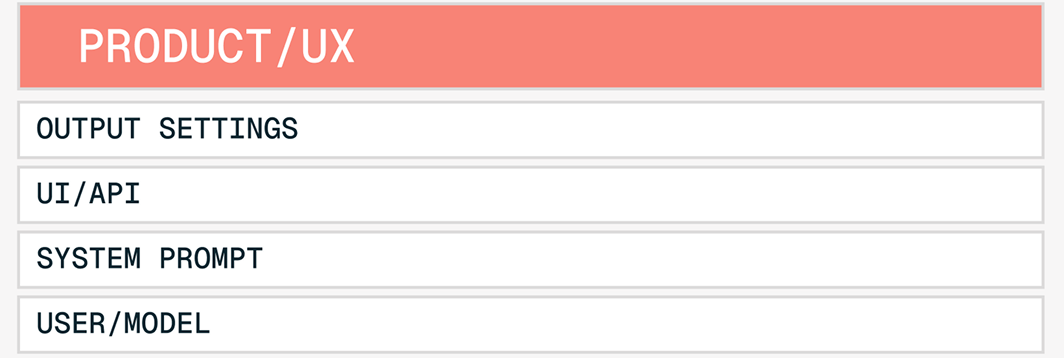
Product design choices and UX components determine what the AI system can be used for, what data it can access to execute its functions, and are responsible for providing a secure, appealing, and reliable experience to users; as well as collecting data to support developers.

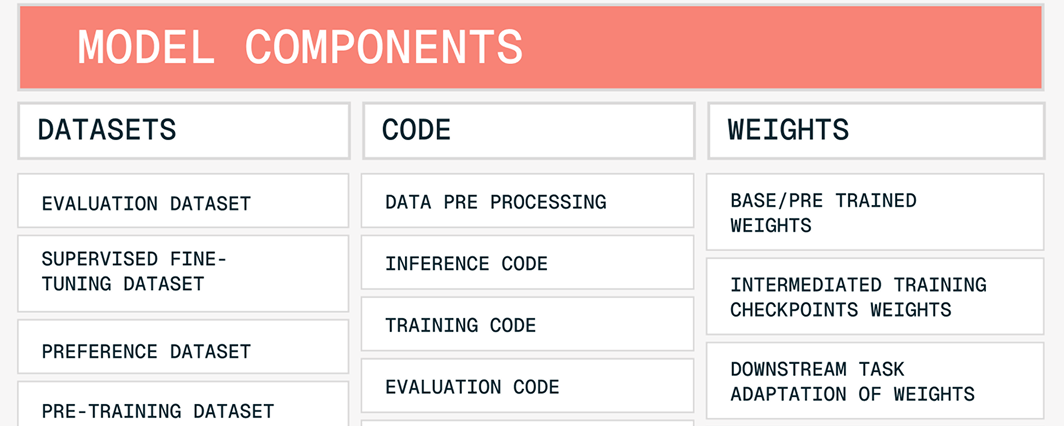
Training data, model weights, and adaptation pipelines determine how underlying AI models respond to specific inputs, shaping the underlying statistical behaviors that can be translated into AI outputs and activities.
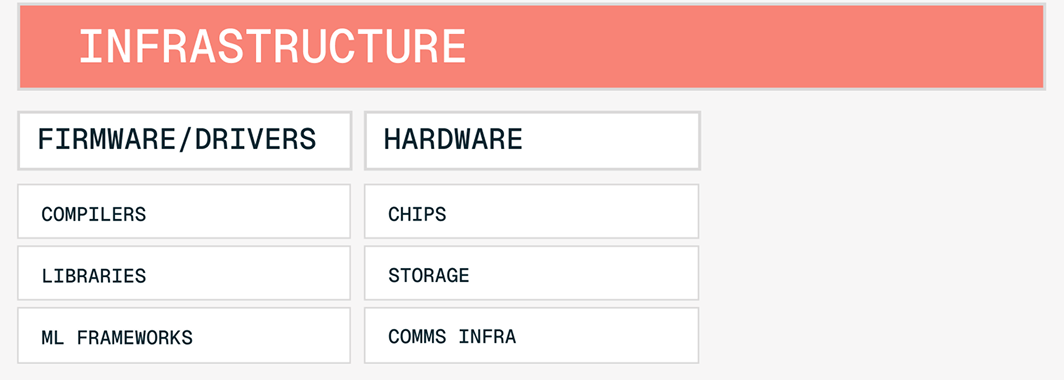
Compute, deployment, and runtime systems determine where models run, how reliably they respond under real use, and what constraints govern their operation; as well as providing the foundations developers need to build, host, and monitor production systems.
5 gaps the open stack falls short on
A gap is more than a missing product. After assessing every product, we sort what’s missing into five types of gap, so it’s clear what each category needs and who can help.

Openness
How open is a technology? A gap in this category shows that the leading products aren't fully open.

Capability
How good and features-rich is this tech? Gaps in Capability mean the best fully open option isn't good enough yet.

Adoption
Are many using this tech? A gap in Adoption means capable fully open options exist, but few people use them.

Resiliency
Strong open options exist, but too few to rely on.

Disclosure
Closed alternatives don't disclose their data or recipes.
About the Gap Map
The Gap Map comes out of cumulative work to identify the points of highest leverage in the stack: where to build, where to invest in capability, where to open up the tools.
We intentionally don’t compare closed versus open AI ecosystems, or point to where open source AI leads or lags. Instead, the Gap Map illustrates what’s needed to build the system we want. What is here today represents just the beginning of what the Gap Map can become. Together we'll continue to build upon and refine it.
For details on how products are scored and categories assessed, see our methodology.